Equipment
Skating Fast, Skating Safe
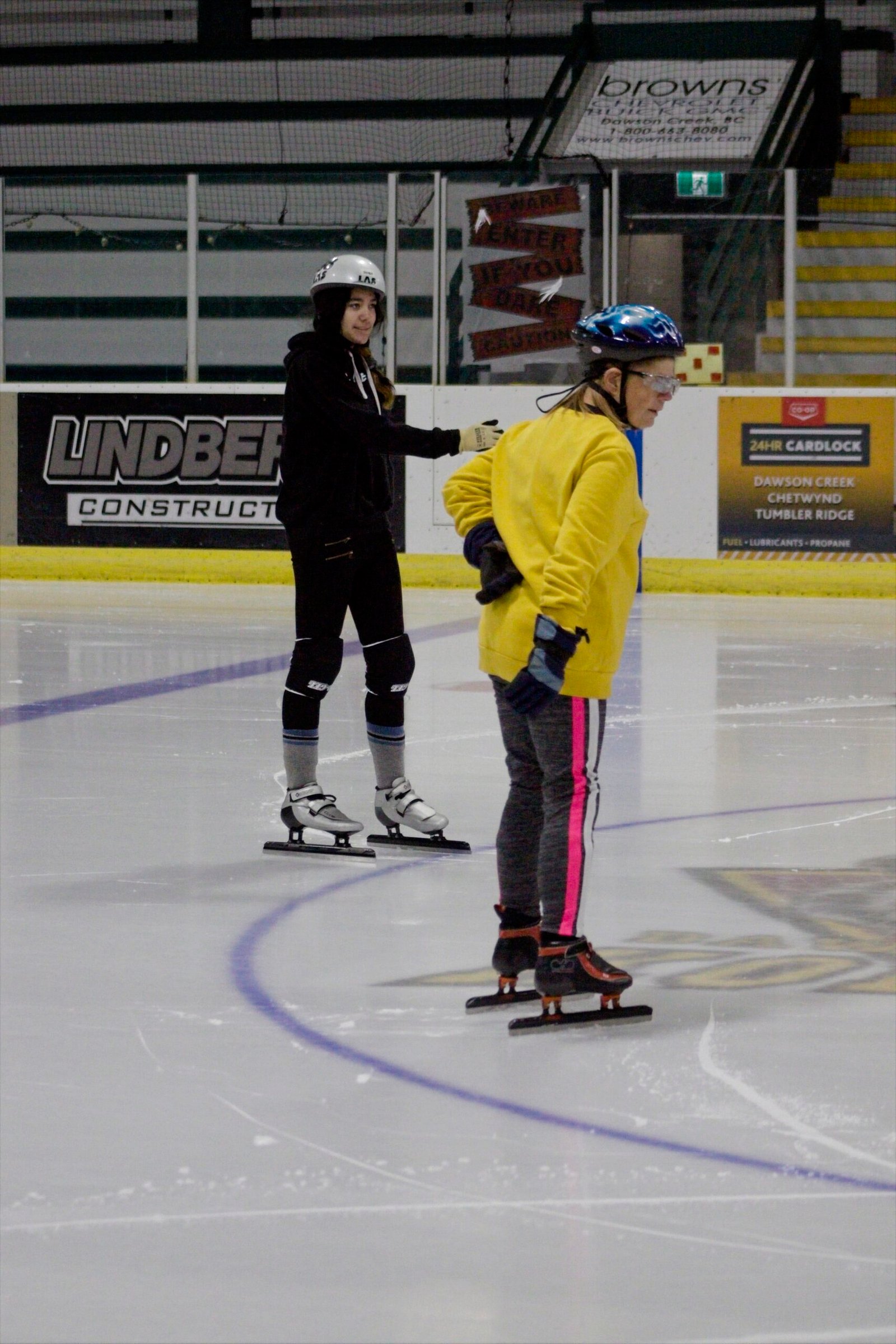
While the idea of ripping around the rink sounds like fun, your safety is also our top priority. The following safety equipment is required while on the ice (Learn to Skate Program is only Skates/Helmet as long as no speed skates are present)
All required protective equipment is required for all short track SSC and SSBC (SS Alberta as well) sanctioned competitions along with all on-ice practices when speed skates are present
For athletes competing in long track events; all safety gear is required for all MASS START events, as for OS (Olympic Style) only a full body suit and shatter resistant glasses are required
Head Protection
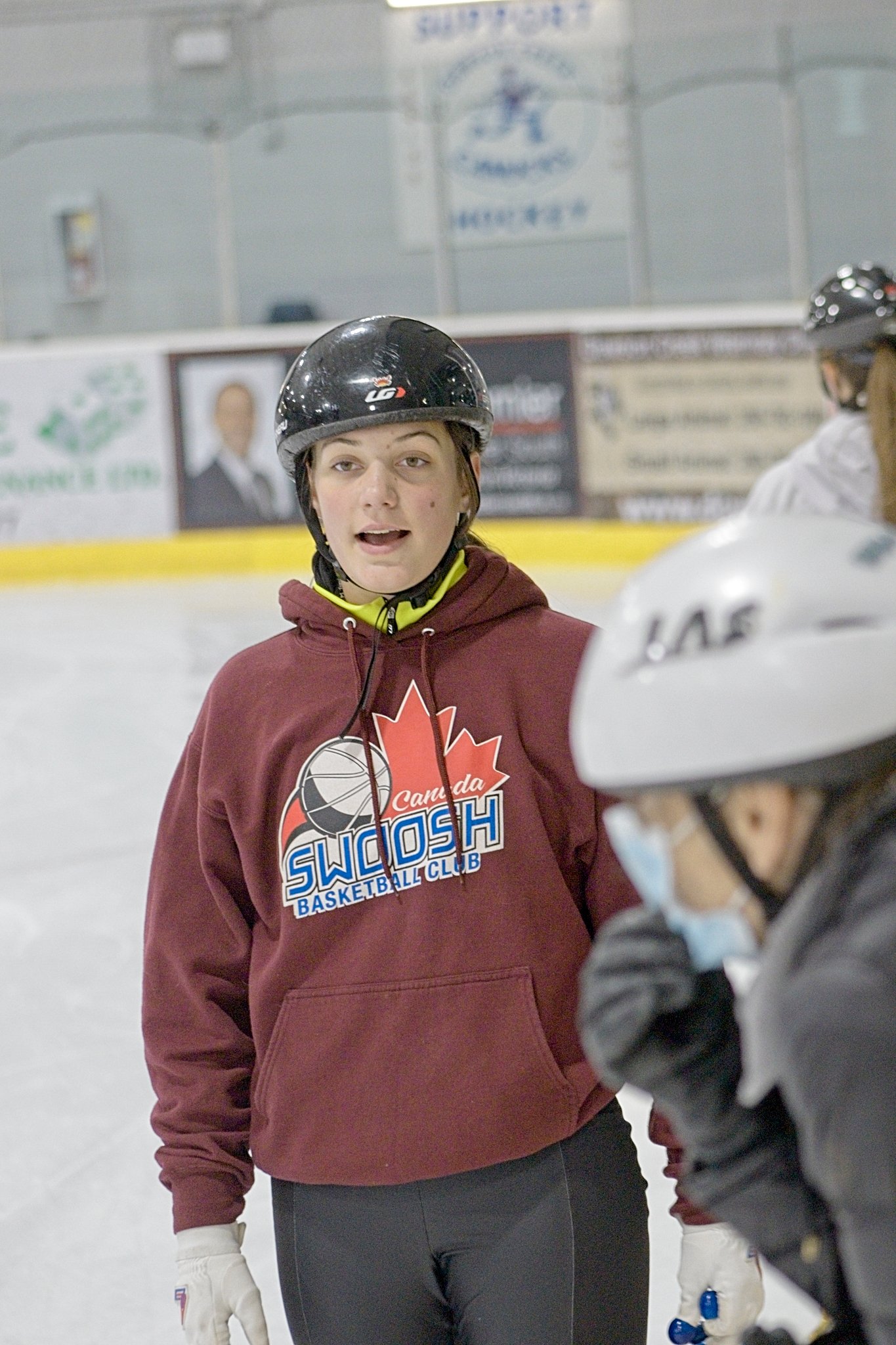
A helmet. Ski/snowboard, hockey, or roller sport helmets are all acceptable. Bike helmets cannot be used because the large vents allow skate blades to pass through.
Neck Protection
A neck guard- bib style. The club may have some for rent.
Hand Protection
Cut-proof gloves or mittens. Ski mitts or leather gloves are best. Hockey gloves are also acceptable.
Ankle Protection
Well-fitting, tall socks. Socks that are too short can cause skin irritation and blisters due to friction against the inside of the skates. A cut and puncture resistant anklet must be worn on both legs, covering the legs from the tops of the boots to 10 cm above the tops of the boots.
Skate Blades
The rear and front tips of all skate blades must be rounded to a minimum radius of 1cm.
Eye Protection
Shatter-resistant clear glasses or a complete visor are required for all skaters. All glasses must be held in place by a strap.
Rest of the Body
Comfortable, athletic-style long sleeve top and pants. A skin suit is not required at the introductory level. As a skater progresses in the sport and begins to compete at national-level competitions, they will require a skin suit with cut-proof material meeting or exceeding ISU standards.
Knee Protection
Knee pads. Soft, volleyball style pads are preferred, although plastic roller sport pads are also acceptable. If possible, plastic pads should be worn underneath the skater’s pants. Hockey knee/shin pads are acceptable, but may limit the skater’s movement. Knee pads that are built-in to a skin suit are also acceptable.
Shin Protection
Shin guards. Hard soccer shin guards are best, but hockey knee/shin pads are also acceptable.
Your Skating Bag
Your skate bag is an important part of your equipment, and if well-stocked, you should have a worry-free season. Your bag should be large enough to carry everything you need. Some skaters store all of their gear in a small, wheeled suitcase, while others use a backpack specifically designed to carry skates, or a shoulder bag.
Skate Blades
The rear and front tips of all skate blades must be rounded to a minimum radius of 1cm. The blades should be protected by fabric or wool “soakers”
Skate Gaurds
Always wear hard guards when walking in your skates. Skates should be stored with the soakers on, not with the guards on. Never leave your wet skates in the hard guards, as the blades will rust rapidly.
Equipment for Meets
Competitions are a huge part of the sport of speed skating, our athletes participate in many events in either long track or short track (some participate in both) resulting in a busy season
Some of these extra items are not mandatory but nessesary for some skaters;
- spare laces. socks, underwear
- Blow dryer for drying out wet skin suits in case of a fall
- Sharpening jig; someone’s bound to have one if you didn’t bring yours or don’t own one
- Cloth for drying off blades and cleaning
- Towel or yoga mat for stretching
- Water bottle
